
A student can sit through a semester of online classes complete every quiz on time and still feel unprepared when a big paper or exam comes up. That is one of the challenges of learning from a distance. Getting access to classes is easier than ever. Building skills does not happen by itself. It needs structure it needs feedback. It needs a different kind of awareness of oneself.
Online education has grown a lot beyond recorded videos and message boards. The best classes now help students read carefully write with proof handle long projects and work with others across different times of the day. These are not skills for school. They are the habits that lead to work in real jobs whether someone is getting ready to write a research plan looking at numbers leading a meeting or writing a plan, for a new rule.
The real question is not whether online learning can help build knowledge. It can. The question is how students take advantage of it.
Why Online Learning Demands Stronger Academic Habits
A traditional classroom gives students a lot of built-in cues. A professor notices confusion. Classmates remind each other about deadlines. The walk to campus creates a routine. Online students often lose those signals, which means they need to create their own.
That can be frustrating at first. It can also be useful. A student who learns to plan readings, track assignment requirements, and ask for help early is developing the same independence expected in graduate school and professional settings.
Writing is a good example. Many students underestimate how much academic writing depends on process: reading sources, taking useful notes, building an argument, revising for clarity, and checking citations. Resources such as Purdue OWL remain valuable for citation and composition guidance, while some students also use editorial references like online paper writing help to better understand structure, formatting expectations, and the difference between rough ideas and polished academic work.
Used responsibly, outside support can clarify standards. It should not replace learning. The strongest students treat examples, feedback, and writing guides as tools for improvement, not shortcuts around effort.
The Core Skills Students Actually Build Online
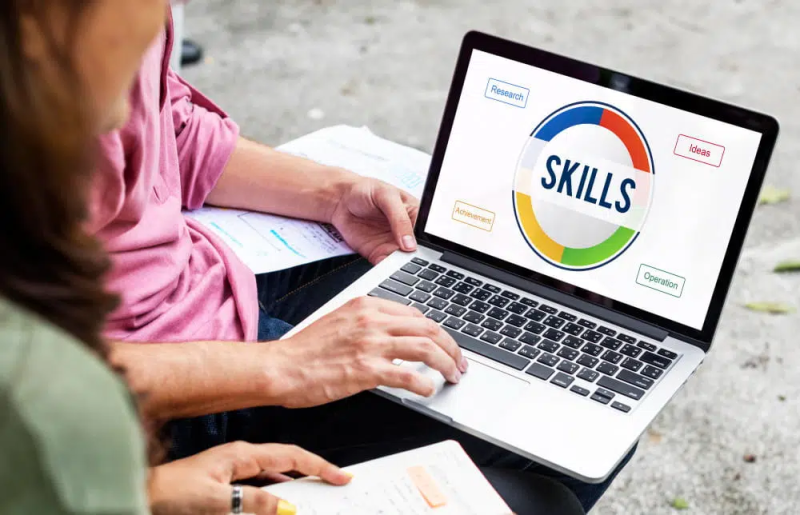
Online courses can help improve academic skills at the same time especially when students engage with them on purpose and not just by accident.
Time management: Online learning shows where time planning fails. A weekly module might seem easy at first. Then readings, videos, quizzes and discussion posts start bumping into real life—like work or family duties.
Critical reading: In classes students often have to go through articles, data, slides and recorded lectures. The goal isn’t to read everything. It’s about knowing what’s important and what can be skipped.
Writing: Students learn to take bits of research and turn them into clear claims, supported by evidence and thoughtful analysis. Many realize that strong writing comes from thinking—not just putting words on paper.
Research judgment: Search engines give results.. Real academic work demands that students tell the difference between peer-reviewed studies official reports, personal opinions and unreliable sources.
Self-advocacy: In learning students have to ask better questions. A vague message like "I don’t get it" doesn’t help much.. A specific question—like "Can you explain the rubric, for this assignment?". What does this concept mean in this article?”—gets real answers.
These skills don’t appear overnight. No one becomes a researcher just because one course teaches how to use a database.. Over time practicing these skills in different classes helps students think in new ways. The more they do it the better they get.
Feedback Matters More Than Platform Features
Education technology companies often showcase dashboards, adaptive quizzes and interactive tools. Some of these tools are truly useful. Yet feedback continues to be the engine that drives growth.
When a student receives a grade student learns very little. When a student receives targeted comments on a thesis statement on source use or on a calculation method student has work to do. Stanford’s teaching resources have long highlighted the value of specific feedback in helping students revise their thinking. The principle applies as strongly online.
Good feedback does not always come from instructors alone. Peer review, writing centers, tutoring sessions and study groups can all help students. The format matters less than the quality of the feedback. Saying "Good job" is pleasant but thin. Saying "Your evidence is strong. The paragraph does not explain how it supports your claim" is truly useful.
Online students should look closely at course design, before enrolling whenever possible. Are there drafts? Are discussion boards substantive? Does the instructor hold office hours? Are rubrics detailed? These small details often predict whether a course will build skill or simply deliver content.
Learning To Manage Attention
Attention is now one of the hardest academic skills to protect. Online students are usually one click away from email, social media, shopping, sports scores, and a dozen half-finished tasks. The problem is not laziness. It is environment.
The U.S. Department of Education has noted that online learning can expand access, but students need support systems to succeed. One of those supports is a realistic study setup. Not a perfect home office. Many students do not have that. A realistic setup might be a library table twice a week, noise-canceling headphones, or a phone left in another room during writing sessions.
Small decisions count.
Study in blocks of 45 to 60 minutes rather than pretending to focus for four straight hours.
Keep a separate document for distracting thoughts so they do not take over the session.
Watch lectures with notes open, not as background noise while doing chores.
Start large assignments by creating a messy outline before trying to write polished paragraphs.
Students often wait to feel motivated. Better to build a routine that works even on low-energy days.
Academic Integrity In A Digital Classroom
Online education gives students freedom. That freedom also means responsibility.
Open-book quizzes, take-home exams shared documents and AI tools have blurred the lines of what was once clear. Schools and universities are still trying to keep up.
Academic integrity isn’t about not copying someone else’s work. It’s about learning how to give credit where it’s due. It’s about knowing the difference between working and taking someone else’s work. It’s also about understanding what kind of help is allowed in a course.
The American Psychological Association gives rules for citing sources. Many colleges now have their written policies, about digital tools and generative AI.
Students should read those policies before they get in trouble. If a class allows grammar checkers but not AI-written drafts that’s a difference. If group discussions are okay but sharing answers is not that matters too.
There’s a rule to follow: if the help you’re using actually helps you understand the material better then it’s probably fine. If the help hides the fact that you don’t understand the material then it’s risky.
The Overlooked Value Of Discussion
Some students treat discussion posts as busywork. This is understandable when prompts are dull. Yet strong online discussions can build one of the important academic skills: explaining a position clearly to people who may not share it. I see that when students engage in discussion posts students learn to express ideas in a clear way.
A good post does more than agree with a reading. It identifies a claim tests it against evidence and raises a question. A good response does not merely say, "I agree." It extends, challenges or complicates the idea. I believe that a good post helps students think deeper.
This is especially useful for students who're hesitant to speak in live classes. Online forums can give students time to think. For students working adults and those returning to education after years away that extra time can be the difference, between silence and meaningful participation. I notice that students who use forums often become more confident.
What Successful Online Students Do Differently
The strongest online learners aren’t always the ones with the technical know-how. They are the ones who show up consistently. They go to the course site before the week gets too busy. They read the assignment rubrics before they start writing. They reach out to instructors before the deadline is close not after it has passed. They save their sources as they search of scrambling to find them at the last minute.
They also take mistakes seriously. A low score on the paper is not a final judgment. It is a sign. Maybe the argument was too wide. Maybe the sources weren’t enough. Maybe the student summarized of really analyzing. Each of these issues can be fixed,. Only if the student pays attention to the feedback.
Harvard’s academic skills resources often highlight reflection as part of learning. That might sound like advice but it works. Students who stop after an assignment and ask themselves what went well what did. What they’ll do differently next time grow faster, than those who just keep moving forward.
Building Skills That Last Beyond The Course
I see that the promise of education is more than just convenience. Its deeper value lies in training students to work independently to speak and write clearly and to keep learning without supervision.
That matters a lot. Careers shift. Tools change. Fields shift. People who can read carefully evaluate evidence write persuasively manage deadlines and seek feedback are better prepared for whatever comes
I believe that building academic skills through online education is not a passive experience. It asks students to participate in their own development. The screen is the setting. The real work happens in the habits students build one assignment, at a time.