
Good
Orbital Synchronization course, in this course we explore the principles and applications of coordinating orbits in space science, engineering, and astrophysics.
To Register in Course you have to watch at least 30 Second of any lesson
What You'll Learn
-
Achieve precise orbital synchronization techniques for satellite deployment and space mission planning using astrophysics principles
-
Apply mathematical models to analyze and predict orbital resonance and synchronization phenomena in celestial bodies
-
Utilize advanced software tools to simulate and optimize orbital synchronization processes in space engineering projects
-
Implement strategies for maintaining stable synchronized orbits in multi-satellite systems and space stations
-
Evaluate the impact of gravitational forces and perturbations on orbital synchronization stability and accuracy
-
Design and execute experiments to demonstrate orbital resonance and synchronization in astrophysical contexts
-
Develop protocols for correcting and adjusting satellite orbits to achieve and sustain synchronization
-
Interpret observational data to identify signs of natural orbital synchronization in astrophysical systems
-
Integrate principles of orbital mechanics and astrophysics to solve real-world synchronization challenges in space missions
-
Communicate complex concepts of orbital synchronization effectively to technical and non-technical audiences
Course Content
31 Lessons • 3 h 30 m total
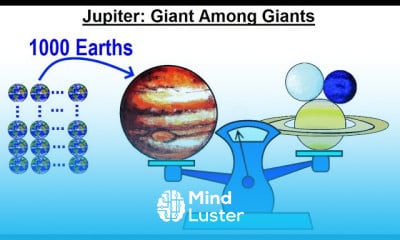
Astronomy Ch 13 Jupiter 1 of 37 Jupiter Giant Among Giants
Astronomy Ch 13 Jupiter 2 of 37 Jupiter s Location in the Solar System Speed 13 1 km sec
Astronomy Ch 13 Jupiter 3 of 37 Jupiter s Composition
Astronomy Ch 13 Jupiter 4 of 37 Jupiter is a Failed Star
Astronomy Ch 13 Jupiter 5 of 37 Jupiter Major Stats Orbital speed 13 km sec
Astronomy Ch 13 Jupiter 6 of 37 Observing Jupiter from Earth
Astronomy Ch 13 Jupiter 7 of 37 Zones and Belts
Astronomy Ch 13 Jupiter 8 of 37 The Great Red Spot
Astronomy Ch 13 Jupiter 9 of 37 Wind Speed
Astronomy Ch 13 Jupiter 10 of 37 Jupiter s Atmospheric Layers
Astronomy Ch 13 Jupiter 11 of 37 Jupiter s Temperature Gradient
Astronomy Ch 13 Jupiter 12 of 37 The Galileo Atmospheric Probe
Astronomy Ch 13 Jupiter 13 of 37 Rotation and Oblateness
Astronomy Ch 13 Jupiter 14 of 37 Orbital Motion of Jupiter
Astronomy Ch 13 Jupiter 15 of 37 Orbital Inclination of Jupiter
Astronomy Ch 13 Jupiter 16 of 37 Jupiter s Interior
Astronomy Ch 13 Jupiter 17 of 37 Jupiter s Magnetic Field
Astronomy Ch 13 Jupiter 18 of 37 Jupiter s Aurora Boreales vs Earth s
Astronomy Ch 13 Jupiter 19 of 37 Jupiter s Aurora Boreales Details
Astronomy Ch 13 Jupiter 20 of 37 The Rings of Jupiter
Astronomy Ch 13 Jupiter 21 of 37 What is Roche Limit
Astronomy Ch 13 Jupiter 22 of 37 Jupiter s Four Inner Moons
Astronomy Ch 13 Jupiter 23 of 37 Jupiter s Galilean Moons
Astronomy Ch 13 Jupiter 24 of 37 Formation of the Jupiter s Galilean Moons
Astronomy Ch 13 Jupiter 25 of 37 Galilean Moons Compared Orbital Parameters
Astronomy Ch 13 Jupiter 26 of 37 Galilean Moons Compared Physical Parameters
Astronomy Ch 13 Jupiter 27 of 37 Galilean Moons Orbital Synchronization
Astronomy Ch 13 Jupiter 28 of 37 Galilean Moon Io General Description
Astronomy Ch 13 Jupiter 29 of 37 Galilean Moon Io Discovery and Observation
Astronomy Ch 13 Jupiter 30 of 37 Galilean Moon Io Plasma Torus
Astronomy Ch 13 Jupiter 31 of 37 Galilean Moon Io Interior
How to Get The Certificate
-
You must have an Account on the platform.
-
Complete all lessons.
-
Watch at least 50% of Lesson Duration.
-
Get your Certificate free 🎉 !
4.7
(54 reviews)
Overall rating
Reviews
Be the First One Review This Course
Very good
Orbital Synchronization in Astrophysics Course Description
Orbital Synchronization course, in this course we explore the principles and applications of coordinating orbits in space science, engineering, and astrophysics.
Focus on Learning, Not Ads
Experience the full power of Mindluster with Premium.
No distractions, just pure education.
Get Mindluster Premium
Cancel your subscription anytime