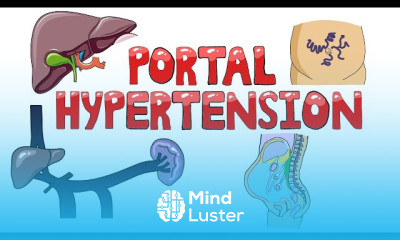
Portal Hypertension Symptoms Course

 (53 reviews)
-
 23 Lessons
-
 5 Students
- Certificate of completion


Portal Hypertension course, in this course we'll delve into the complexities of portal hypertension, a condition characterized by elevated pressure within the portal venous system. Participants will explore its etiology, pathophysiology, clinical manifestations, and associated complications such as variceal bleeding, ascites, and hepatic encephalopathy. Through discussions on diagnostic modalities and therapeutic interventions, including medical management, endoscopic procedures, and surgical options, learners will gain insights into effectively managing patients with portal hypertension and improving their quality of life.
 To Register in Course you have to watch at least 30 Second of any lesson
What You'll Learn
-
 Identify key symptoms and clinical signs of portal hypertension and related complications such as variceal bleeding and ascites
-
Explain the pathophysiology and etiology of portal hypertension in liver disease and cirrhosis
-
Assess diagnostic tools including imaging, endoscopy, and laboratory tests for portal hypertension evaluation
-
Develop management strategies for portal hypertension, focusing on medical, endoscopic, and surgical interventions
-
Recognize early signs of hepatic encephalopathy and implement appropriate treatment plans
-
Describe the role of lifestyle modifications and pharmacotherapy in controlling portal hypertension symptoms
-
Evaluate the effectiveness of different treatment options to prevent and manage variceal hemorrhage
-
Understand the impact of portal hypertension on patient quality of life and long-term prognosis
-
Apply clinical guidelines to diagnose and treat portal hypertension in diverse healthcare settings
-
Utilize multidisciplinary approaches for comprehensive management of portal hypertension patients
Course Content
23 Lessons • 2 h 31 m total

Portal Hypertension Causes of Portal Hypertension Pre Intra Post Hepatic Symptoms Diagnosis
Hypoalbuminemia Functions of Albumin in the Body Pathophysiology of Hypoalbuminemia
Hepatorenal Syndrome Pathophysiology What is the mechanism of Hepatorenal Syndrome
Cytochrome P450 Inducers and Inhibitors Mnemonic and Table CYP450 SICKFACES CRAP GPS
ASCITES Serum Ascites Albumin Gradient SAAG Ascites Pathophysiology Ascites Causes
JAUNDICE Differential diagnosis of Jaundice Prehepatic Hepatic Post Hepatic Causes of Jaundice
Liver Cirrhosis What happens in Liver Cirrhosis Pathophysiology Causes Signs Symptoms
Hepatic Encephalopathy Pathophysiology Stages and West Haven Criteria
Viral Hepatitis How Does Hepatitis Affect The Liver Acute vs Chronic Hepatitis
Viral Hepatitis Comparison in 3 Minutes What are the different types of Viral Hepatitis
Hepatitis B Serology MADE EASY How to Interpret Hepatitis B Serology in under 5 minutes
Gallstone Disease Acute Cholecystitis vs Cholelithiasis vs Choledocholithiasis vs Cholangitis
Intestinal Ischemia Mesenteric Ischemia Acute Chronic Ischemic Colitis
Irritable Bowel Syndrome IBS Including Symptoms Criteria Treatment
Gastric Cancer An Overview for Students and Junior Doctors Including Troisier s Sign
Understanding Colorectal Cancer Includes Polyps
Primary Sclerosing Cholangitis v Primary Biliary Cholangitis Primary Biliary Cirrhosis
Inflammatory Bowel Disease Ulcerative Colitis v Crohn s Disease With Histology Manifestations
Microscopic Colitis Lymphocytic Collagenous Colitis An Underdiagnosed Form of IBD
Hiatal Hernia Explained Hiatus Hernia
Understanding Diverticular Disease Diverticulosis vs Diverticulitis
Understanding Haemochromatosis Hereditary Secondary
Understanding Wilson s Disease Hepatolenticular Degeneration
How to Get The Certificate
-
You must have an
Account
on the platform.
-
Complete all lessons.
-
Watch at least 50% of Lesson Duration.
-
Get your Certificate free 🎉 !
4.6
(53 reviews)
Overall rating

Reviews
Be the First One Review This Course
Related Courses
View All








Portal Hypertension Symptoms Course Description
Portal Hypertension course, in this course we'll delve into the complexities of portal hypertension, a condition characterized by elevated pressure within the portal venous system. Participants will explore its etiology, pathophysiology, clinical manifestations, and associated complications such as variceal bleeding, ascites, and hepatic encephalopathy. Through discussions on diagnostic modalities and therapeutic interventions, including medical management, endoscopic procedures, and surgical options, learners will gain insights into effectively managing patients with portal hypertension and improving their quality of life.
Focus on Learning, Not Ads
Experience the full power of Mindluster with Premium.
No distractions, just pure education.
Cancel your subscription anytime
