


Melat Solomon
Good
 (191 reviews)
 2 Lessons
 15 Students
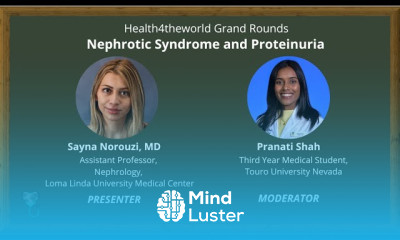
Nephrotic Syndrome Diagnosis course, in this course we will learn about the key diagnostic criteria and techniques for identifying nephrotic syndrome, including proteinuria assessment, urine analysis, and renal function tests. Explore the latest advancements in diagnostic imaging modalities and biopsy procedures to accurately diagnose and differentiate various etiologies of nephrotic syndrome. Gain insights into clinical presentations, differential diagnoses, and the role of laboratory investigations in guiding treatment decisions for patients with nephrotic syndrome.
 To Register in Course you have to watch at least 30 Second of any lesson
 Identify key diagnostic criteria and laboratory tests for nephrotic syndrome diagnosis using urine analysis and renal function assessments
Apply advanced imaging modalities and biopsy techniques to differentiate etiologies of nephrotic syndrome accurately
Interpret clinical presentations and laboratory results to distinguish nephrotic syndrome from other renal disorders
Evaluate the role of diagnostic tools in guiding effective treatment decisions for patients with nephrotic syndrome
2 Lessons • 2 h 9 m total
You must have an
Account
on the platform.
Complete all lessons.
Watch at least 50% of Lesson Duration.
Get your Certificate free 🎉 !
4.0
(191 reviews)
Overall rating

Be the First One Review This Course
Good
the lecture was useful in many ways adding more deep information for academic studies and i will be taking more lessons

Nephrotic Syndrome Diagnosis course, in this course we will learn about the key diagnostic criteria and techniques for identifying nephrotic syndrome, including proteinuria assessment, urine analysis, and renal function tests. Explore the latest advancements in diagnostic imaging modalities and biopsy procedures to accurately diagnose and differentiate various etiologies of nephrotic syndrome. Gain insights into clinical presentations, differential diagnoses, and the role of laboratory investigations in guiding treatment decisions for patients with nephrotic syndrome.
Experience the full power of Mindluster with Premium.
No distractions, just pure education.
Cancel your subscription anytime