Harsha
GOOD
 (316 reviews)
 57 Lessons
 567 Students
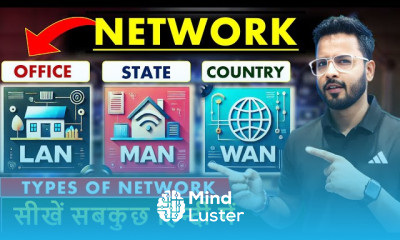
Computer networks types course in hindi, in this course we will learn about the types of computer networks, their functionalities, and their significance. Computer networks are the backbone of modern communication systems, enabling data exchange and connectivity across various devices and locations. We'll explore different network types, including Local Area Networks (LAN) that connect devices within a limited area, and Wide Area Networks (WAN) that cover broader geographic regions. We'll delve into Wireless Networks, which use radio waves for data transmission, and the Internet, the global network connecting millions of private and public networks. Additionally, we'll discuss Virtual Private Networks (VPN) for secure connections, Peer-to-Peer Networks where devices share resources directly, and Cloud Computing Networks that provide scalable online services. By the end of this course, you'll have a comprehensive understanding of these network types, their applications, and how they shape the digital world. This knowledge is essential for anyone interested in IT, network administration, or cybersecurity. Join us to uncover the intricacies of computer networks and their pivotal role in today's technology-driven environment.
 To Register in Course you have to watch at least 30 Second of any lesson
 Identify different types of computer networks including LAN, WAN, and WLAN for effective network design and management
Explain the functionalities and applications of Wireless Networks and Internet connectivity in modern communication systems
Describe Virtual Private Networks (VPN) and their role in ensuring secure remote access and data privacy
Differentiate between Peer-to-Peer and Client-Server networks for resource sharing and network architecture planning
Analyze Cloud Computing Networks and their impact on scalable online services and data storage solutions
Assess the significance of network types in cybersecurity, data exchange, and digital communication strategies
Implement basic configurations for LAN, WAN, and Wireless Networks to optimize connectivity and performance
Evaluate the advantages and limitations of various network types for business and personal use
57 Lessons • 9 h 18 m total

 You must have an
Account
on the platform.
Complete all lessons.
Watch at least 50% of Lesson Duration.
Get your Certificate free 🎉 !
4.3
(316 reviews)
Overall rating

Be the First One Review This Course
GOOD
Good

good

good and useful course

GOOD
GOOD

Good

GOOD

GOOD

Kk

good

Good

Computer networks types course in hindi, in this course we will learn about the types of computer networks, their functionalities, and their significance. Computer networks are the backbone of modern communication systems, enabling data exchange and connectivity across various devices and locations. We'll explore different network types, including Local Area Networks (LAN) that connect devices within a limited area, and Wide Area Networks (WAN) that cover broader geographic regions. We'll delve into Wireless Networks, which use radio waves for data transmission, and the Internet, the global network connecting millions of private and public networks. Additionally, we'll discuss Virtual Private Networks (VPN) for secure connections, Peer-to-Peer Networks where devices share resources directly, and Cloud Computing Networks that provide scalable online services. By the end of this course, you'll have a comprehensive understanding of these network types, their applications, and how they shape the digital world. This knowledge is essential for anyone interested in IT, network administration, or cybersecurity. Join us to uncover the intricacies of computer networks and their pivotal role in today's technology-driven environment.
Experience the full power of Mindluster with Premium.
No distractions, just pure education.
Cancel your subscription anytime