


Jadhav Dnyaneshwari
Good
 (108 reviews)
 126 Lessons
 243 Students
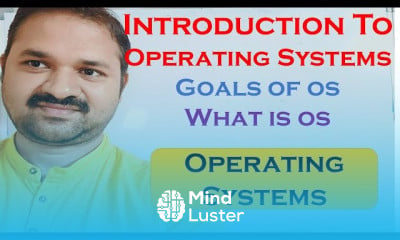
Operating systems types course in hindi, in this course we will learn about the Operating Systems Types, delving into the various categories and their unique characteristics. Operating systems (OS) are the backbone of computer functionality, managing hardware and software resources, and providing essential services for applications. We will explore different types of operating systems, including Batch Operating Systems, which handle jobs in bulk without user interaction; Time-Sharing Operating Systems, allowing multiple users to share system resources simultaneously; and Distributed Operating Systems, which manage a group of independent computers to appear as a single coherent system. We'll also cover Network Operating Systems that provide networking capabilities, Real-Time Operating Systems used for time-critical applications, and Embedded Operating Systems designed for specific hardware. Furthermore, we'll discuss Mobile Operating Systems like Android and iOS, Desktop Operating Systems such as Windows, macOS, and Linux, and Server Operating Systems tailored for server environments. The course will provide insights into Mainframe Operating Systems, Cloud Operating Systems, and emerging trends like Hybrid and IoT Operating Systems. By the end of this course, you will have a comprehensive understanding of the different types of operating systems, their functionalities, and their applications in various fields. Join us to explore the diverse world of operating systems and enhance your knowledge in this fundamental area of computer science.
 To Register in Course you have to watch at least 30 Second of any lesson
 Identify different types of operating systems including batch, time-sharing, distributed, and network OS with their key features and applications
Explain the functionalities of real-time, embedded, mobile, desktop, and server operating systems in practical scenarios
Compare and contrast mainframe, cloud, hybrid, and IoT operating systems based on their design, use cases, and advantages
Analyze the role of operating systems in managing hardware resources, software, and network connectivity effectively
Evaluate the security, performance, and user interface considerations across various operating system types
Apply knowledge of operating systems to troubleshoot common issues in different environments and hardware setups
Describe emerging trends in operating systems such as hybrid, IoT, and cloud-based systems for future technology integration
Demonstrate understanding of the practical applications of operating systems in fields like mobile computing, enterprise, and embedded systems
126 Lessons • 22 h 48 m total

 You must have an
Account
on the platform.
Complete all lessons.
Watch at least 50% of Lesson Duration.
Get your Certificate free 🎉 !
4.4
(108 reviews)
Overall rating

Be the First One Review This Course
Good

good
nice teaching, happy that yt ads won't interrupt, but the percentge won't increase if i watch the video in 2x speed, hence, the certificate eligibility too. i wish even watching in 2x speed increases the learning progress to 100%

Good

It was great and helpful

Good
it's helpful

it's good

good

helpful

It was great and useful

Good

Operating systems types course in hindi, in this course we will learn about the Operating Systems Types, delving into the various categories and their unique characteristics. Operating systems (OS) are the backbone of computer functionality, managing hardware and software resources, and providing essential services for applications. We will explore different types of operating systems, including Batch Operating Systems, which handle jobs in bulk without user interaction; Time-Sharing Operating Systems, allowing multiple users to share system resources simultaneously; and Distributed Operating Systems, which manage a group of independent computers to appear as a single coherent system. We'll also cover Network Operating Systems that provide networking capabilities, Real-Time Operating Systems used for time-critical applications, and Embedded Operating Systems designed for specific hardware. Furthermore, we'll discuss Mobile Operating Systems like Android and iOS, Desktop Operating Systems such as Windows, macOS, and Linux, and Server Operating Systems tailored for server environments. The course will provide insights into Mainframe Operating Systems, Cloud Operating Systems, and emerging trends like Hybrid and IoT Operating Systems. By the end of this course, you will have a comprehensive understanding of the different types of operating systems, their functionalities, and their applications in various fields. Join us to explore the diverse world of operating systems and enhance your knowledge in this fundamental area of computer science.
Experience the full power of Mindluster with Premium.
No distractions, just pure education.
Cancel your subscription anytime