Understand and identify key Islamic finance types, including Murabaha, Mudarabah, Musharakah, Ijarah, and Sukuk, for ethical investing and financial planning
Apply Islamic financial contracts such as Salam, Istisna, and Qard Hasan in real-world trade, manufacturing, and social welfare contexts
Analyze the principles of Shariah compliance, risk-sharing, and ethical investing in Islamic finance to ensure legal and ethical adherence
Evaluate the role of Islamic financial institutions and regulatory frameworks in promoting sustainable development and social justice
Islamic Finance types and principles Course Description
Islamic Finance types course,
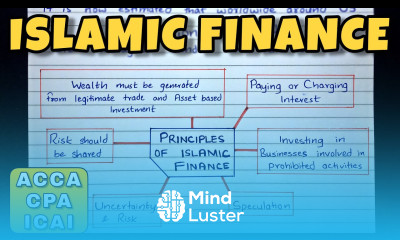
in this course we will learn about the Islamic Finance types, focusing on the various financial instruments and contracts that comply with Shariah law. Participants will explore the fundamental principles of Islamic finance, such as the prohibition of interest (riba), the avoidance of excessive uncertainty (gharar), and the importance of risk-sharing and ethical investing.
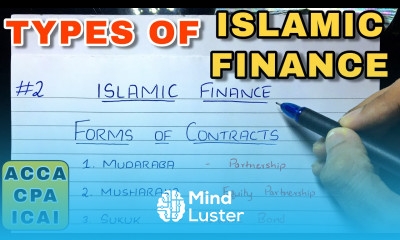
The course will cover key Islamic financial contracts, including Murabaha (cost-plus financing), Mudarabah (profit-sharing partnership), Musharakah (joint venture financing), Ijarah (Islamic leasing), and Sukuk (Islamic bonds). Each type of contract will be explained in detail, highlighting its structure, applications, and benefits. We will also delve into Salam (advance purchase financing) and Istisna (construction and manufacturing financing), which are used for specific types of trade and manufacturing transactions.
Additionally, the course will discuss Qard Hasan (benevolent loan), a no-interest loan provided for social welfare purposes, and Takaful (Islamic insurance), which is based on mutual cooperation and shared responsibility. Participants will learn about the practical applications of these contracts in various industries and their impact on promoting social justice and economic development.
We will explore the regulatory framework governing Islamic finance, ensuring compliance with Shariah principles, and the role of Islamic financial institutions in fostering sustainable development. Real-world case studies and examples will illustrate how Islamic finance can be applied effectively to meet diverse financial needs while adhering to ethical standards.