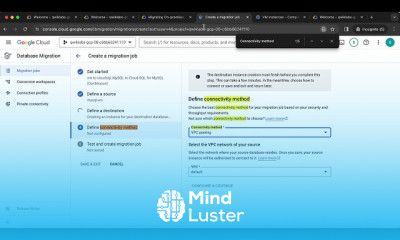
Database fundamentals for beginners Course

 (143 reviews)
-
 32 Lessons
-
 32 Students
- Certificate of completion


Database fundamentals course, in this course we will learn about Database Fundamentals, providing a solid foundation in the essential concepts and techniques for managing and working with databases. Databases are crucial for storing, organizing, and retrieving data efficiently, making them a cornerstone of modern applications and information systems. The course covers key topics such as database design, understanding relational models, normalization, and the use of SQL (Structured Query Language) for querying and managing databases. You'll explore different types of databases, including relational and non-relational systems, and learn how to create and manage database schemas, tables, and relationships. Additionally, the course delves into data integrity, indexing, and optimization techniques to ensure efficient data retrieval and management. You'll also gain insights into database security and backup strategies to protect and maintain data integrity. By the end of this course, you will have a comprehensive understanding of database fundamentals, equipping you with the skills needed to design, implement, and manage databases effectively. Whether you're a beginner or looking to refresh your knowledge, this course will provide the foundational knowledge necessary for working with databases in various contexts.
 To Register in Course you have to watch at least 30 Second of any lesson
What You'll Learn
-
 Understand core database concepts including relational models, normalization, and data integrity techniques for effective data management
-
Design and create database schemas, tables, and relationships using SQL for real-world applications
-
Write efficient SQL queries to retrieve, update, and manipulate data in relational and non-relational databases
-
Apply database normalization principles to optimize data storage and reduce redundancy in practical scenarios
-
Implement indexing and optimization strategies to enhance database performance and query speed
-
Assess different types of databases, including relational and non-relational systems, for suitable application use cases
-
Ensure data security by applying best practices in database security, user access control, and backup strategies
-
Manage database backups and recovery processes to maintain data integrity and minimize data loss risks
-
Utilize database management tools and techniques for effective database administration and troubleshooting
-
Develop foundational skills for working with databases in various industries, including finance, healthcare, and e-commerce
Course Content
32 Lessons • 13 h 0 m total

Migrating On premises MySQL Using a Continuous Database Migration Service Job
Migrating MySQL User Data When Running Database Migration Service Jobs GSP861
Migrating to AlloyDB from PostgreSQL Using Database Migration Service GSP1084
Migrating to Cloud SQL from Amazon RDS for MySQL Using Database Migration Service GSP859
Migrating to AlloyDB from PostgreSQL Using PostgreSQL Tools GSP1085
Migrating an application and data from Apache Cassandra to DataStax Enterprise GSP707
Build and Execute MySQL PostgreSQL and SQLServer to Data Catalog Connectors GSP814
Scaling Microservices Applications Migration to Redis Enterprise on Google Cloud GSP1177
Deploying an Open Source Cassandra Database using the GCP Marketplace GSP704
Online Data Migration to Cloud Spanner using Striim GSP703
Using OpenTSDB to Monitor Time Series Data on Cloud Platform GSP142
Cloud Spanner Database Fundamentals GSP1048
Cloud Spanner Loading Data and Performing Backups GSP1049
Cloud Spanner Defining Schemas and Understanding Query Plans GSP1050
Deploy a Modern Web App connected to a Cloud Spanner Instance GSP1051
Accelerating Analytical Queries using the AlloyDB Columnar Engine GSP1087
Reconciling Account Data with Cloud Spanner Change Streams GSP1097
Cloud Spanner Qwik Start GSP102
Importing Data to a Firestore Database GSP642
AlloyDB Database Fundamentals GSP1083
Administering an AlloyDB Database GSP1086
Running Queries and Transactions SCBL006
Scanning User generated Content Using the Cloud Video Intelligence and Cloud Vision APIs GSP138
VPC Flow Logs Analyzing Network Traffic GSP212
VM Migration Planning GSP616
Streaming HL7 to FHIR Data with Dataflow and the Healthcare API GSP894
Creating a Data Warehouse Through Joins and Unions GSP413
Data Catalog Qwik Start GSP729
Bracketology with Google Machine Learning GSP461
Analytics as a Service for Data Sharing Partners GSP1042
Visualizing Data with Google Data Studio GSP197
Prepare Data for ML APIs on Google Cloud Challenge Lab GSP323
How to Get The Certificate
-
You must have an
Account
on the platform.
-
Complete all lessons.
-
Watch at least 50% of Lesson Duration.
-
Get your Certificate free 🎉 !


4.6
(143 reviews)
Overall rating

Reviews
Be the First One Review This Course
Related Courses
View All









Database fundamentals for beginners Course Description
Database fundamentals course, in this course we will learn about Database Fundamentals, providing a solid foundation in the essential concepts and techniques for managing and working with databases. Databases are crucial for storing, organizing, and retrieving data efficiently, making them a cornerstone of modern applications and information systems. The course covers key topics such as database design, understanding relational models, normalization, and the use of SQL (Structured Query Language) for querying and managing databases. You'll explore different types of databases, including relational and non-relational systems, and learn how to create and manage database schemas, tables, and relationships. Additionally, the course delves into data integrity, indexing, and optimization techniques to ensure efficient data retrieval and management. You'll also gain insights into database security and backup strategies to protect and maintain data integrity. By the end of this course, you will have a comprehensive understanding of database fundamentals, equipping you with the skills needed to design, implement, and manage databases effectively. Whether you're a beginner or looking to refresh your knowledge, this course will provide the foundational knowledge necessary for working with databases in various contexts.
Focus on Learning, Not Ads
Experience the full power of Mindluster with Premium.
No distractions, just pure education.
Cancel your subscription anytime
