

Vardhaman 1008
Good
 (125 reviews)
 8 Lessons
 439 Students
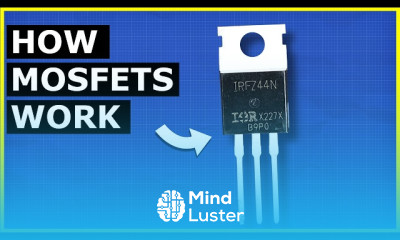
Electronic Components fundamentals course, in this course you’ll gain a solid foundation in understanding the key components that form the building blocks of all electronic devices. This course starts with the basics of passive components like resistors, capacitors, and inductors, exploring their functions, behavior in circuits, and real-world applications. You will then dive into active components such as diodes, transistors, and integrated circuits (ICs), learning how they control current, amplify signals, and enable complex functionalities in electronic systems. The course emphasizes hands-on experience, allowing you to apply theory through practical exercises and circuit-building activities. You will learn how to identify components, interpret circuit diagrams, and read datasheets to understand component specifications. Each section includes troubleshooting tips, helping you diagnose common issues and ensure reliable circuit performance. We will also cover essential tools and techniques, such as multimeters for testing and measuring component values, and basic soldering skills for assembling circuits. By the end of this course, you will have a comprehensive understanding of electronic components, empowering you to confidently design, build, and troubleshoot basic circuits. Whether you're a beginner in electronics or looking to solidify your knowledge, this course will provide the essential skills needed to work effectively with a wide range of electronic components.
 To Register in Course you have to watch at least 30 Second of any lesson
 Identify and describe the functions of passive electronic components like resistors, capacitors, and inductors in circuits
Interpret circuit diagrams and datasheets to select appropriate electronic components for projects
Apply practical skills in soldering, circuit assembly, and troubleshooting electronic components and circuits
Use multimeters and testing tools to measure and diagnose electronic component performance and circuit issues
Explain the operation of active components such as diodes, transistors, and integrated circuits in electronic systems
Design simple electronic circuits incorporating passive and active components for real-world applications
8 Lessons • 2 h 14 m total
You must have an
Account
on the platform.
Complete all lessons.
Watch at least 50% of Lesson Duration.
Get your Certificate free 🎉 !
4.4
(125 reviews)
Overall rating

Be the First One Review This Course
Good

Good

Good

Good

Good
Good
Excellent

Good

Good
Good
Good
Good

Electronic Components fundamentals course, in this course you’ll gain a solid foundation in understanding the key components that form the building blocks of all electronic devices. This course starts with the basics of passive components like resistors, capacitors, and inductors, exploring their functions, behavior in circuits, and real-world applications. You will then dive into active components such as diodes, transistors, and integrated circuits (ICs), learning how they control current, amplify signals, and enable complex functionalities in electronic systems. The course emphasizes hands-on experience, allowing you to apply theory through practical exercises and circuit-building activities. You will learn how to identify components, interpret circuit diagrams, and read datasheets to understand component specifications. Each section includes troubleshooting tips, helping you diagnose common issues and ensure reliable circuit performance. We will also cover essential tools and techniques, such as multimeters for testing and measuring component values, and basic soldering skills for assembling circuits. By the end of this course, you will have a comprehensive understanding of electronic components, empowering you to confidently design, build, and troubleshoot basic circuits. Whether you're a beginner in electronics or looking to solidify your knowledge, this course will provide the essential skills needed to work effectively with a wide range of electronic components.
Experience the full power of Mindluster with Premium.
No distractions, just pure education.
Cancel your subscription anytime