


kolakaluru surendra
GOOD
 (113 reviews)
 10 Lessons
 273 Students
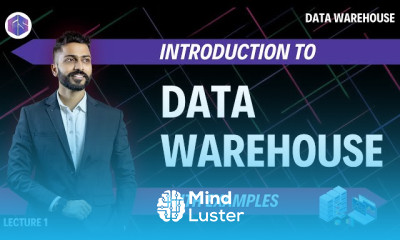
Data warehouse fundamentals , in this course provides an introduction to the key concepts of data warehousing. You will learn about the structure, purpose, and design of data warehouses, focusing on how they help organizations store, manage, and analyze large amounts of data. The course covers essential topics such as ETL (Extract, Transform, Load) processes, dimensional modeling, and the difference between OLTP (Online Transaction Processing) and OLAP (Online Analytical Processing). You'll explore best practices for building and managing data warehouses, including designing schemas (star and snowflake) and integrating data from multiple sources. Practical examples and case studies will help reinforce these concepts, providing you with the skills needed to design and implement effective data warehouse solutions for data analysis, reporting, and business intelligence. By the end of the course, you'll have a solid understanding of how data warehousing plays a crucial role in decision-making processes within organizations.
 To Register in Course you have to watch at least 30 Second of any lesson
 Design and implement data warehouse architectures using star and snowflake schemas for effective data analysis and reporting
Apply ETL processes to extract, transform, and load data from multiple sources into data warehouses efficiently
Differentiate between OLTP and OLAP systems to optimize data storage, management, and analytical performance
Develop dimensional models to support business intelligence, data mining, and decision-making processes
Integrate data from diverse sources to create comprehensive, scalable, and reliable data warehouse solutions
Utilize best practices for managing and maintaining data warehouses to ensure data quality, security, and performance
10 Lessons • 1 h 2 m total
 You must have an
Account
on the platform.
Complete all lessons.
Watch at least 50% of Lesson Duration.
Get your Certificate free 🎉 !
4.2
(113 reviews)
Overall rating

Be the First One Review This Course
GOOD

good

The course was very informative and easy to understand

excellent
nice

great course
Amazing session

good

Well explained DW concepts
good

good

.

Data warehouse fundamentals , in this course provides an introduction to the key concepts of data warehousing. You will learn about the structure, purpose, and design of data warehouses, focusing on how they help organizations store, manage, and analyze large amounts of data. The course covers essential topics such as ETL (Extract, Transform, Load) processes, dimensional modeling, and the difference between OLTP (Online Transaction Processing) and OLAP (Online Analytical Processing). You'll explore best practices for building and managing data warehouses, including designing schemas (star and snowflake) and integrating data from multiple sources. Practical examples and case studies will help reinforce these concepts, providing you with the skills needed to design and implement effective data warehouse solutions for data analysis, reporting, and business intelligence. By the end of the course, you'll have a solid understanding of how data warehousing plays a crucial role in decision-making processes within organizations.
Experience the full power of Mindluster with Premium.
No distractions, just pure education.
Cancel your subscription anytime