
 35 Lessons
 87 Students



Harshal Vijay Patil
good
JavaFX and JavaSwing are mostly outdated. Their primary use is writing desktop apps that run on both MacOS and Windows. If the purpose of your app is to expose a proprietary data to both MacOS and Windows, a web-application will be your best choice.
 To Register in Course you have to watch at least 30 Second of any lesson
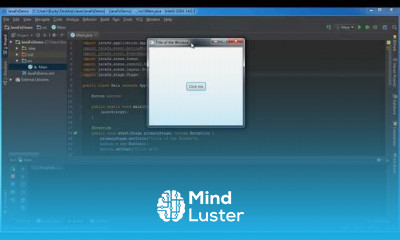
 Create modern JavaFX interfaces for cross-platform desktop applications using JavaFX and Java Swing tools
Implement responsive GUI layouts and controls for Java desktop applications with JavaFX
Design user-friendly JavaFX applications optimized for MacOS and Windows environments
Integrate JavaFX with backend data sources to develop dynamic desktop applications
Apply best practices for JavaFX event handling, animations, and user interactions
Utilize JavaFX Scene Builder for efficient GUI design and prototyping
Debug and troubleshoot JavaFX applications to ensure smooth performance and stability
Implement custom styles and themes to enhance JavaFX application aesthetics and usability
Develop scalable JavaFX applications with modular code architecture and reusable components
Leverage JavaFX features to create engaging, accessible, and professional desktop user interfaces
35 Lessons • 4 h 40 m total
 You must have an
Account
on the platform.
Complete all lessons.
Watch at least 50% of Lesson Duration.
Get your Certificate free 🎉 !
4.1
 (39 reviews)
Overall rating

Be the First One Review This Course
good

the course matter was very benificial

Great course
ELBAHLOULI Salma

good

it's very Good
Thank you

it was a good and helpful course , i really like how they explain lessons
excellent lessons
it was a very good course
i like it
it was a good course

JavaFX and JavaSwing are mostly outdated. Their primary use is writing desktop apps that run on both MacOS and Windows. If the purpose of your app is to expose a proprietary data to both MacOS and Windows, a web-application will be your best choice.
Experience the full power of Mindluster with Premium.
No distractions, just pure education.
Cancel your subscription anytime