


Harshit Kumar Singh
lessons were helpful
 (6 reviews)
 22 Lessons
 98 Students
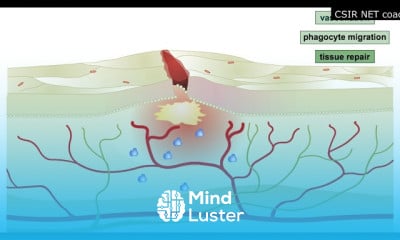
Macrophage structure, in this course we will learn about the cellular architecture of macrophages—vital immune cells responsible for defense, repair, and regulation. You will explore their large, irregular shape, prominent nucleus, and cytoplasm rich in lysosomes and vesicles that allow them to engulf pathogens and debris. We’ll examine the structural components that enable macrophages to migrate to infection sites, interact with other immune cells, and respond to signals in their environment. Special focus will be placed on surface receptors like toll-like receptors (TLRs) and MHC molecules, which are crucial for detecting threats and presenting antigens. Through diagrams and real microscopy images, you'll understand how structure supports function in macrophages. This course is ideal for biology, immunology, and medical students seeking foundational knowledge of immune cell morphology. Join us and explore the detailed design of one of the body’s most important immune defenders. Shomu s Biology
 To Register in Course you have to watch at least 30 Second of any lesson
 Identify macrophage cellular components and their roles in immune response and tissue repair
Describe macrophage morphology, including shape, nucleus, and cytoplasmic features like lysosomes and vesicles
Explain how macrophage structure facilitates pathogen engulfment, debris clearance, and immune signaling
Analyze the significance of surface receptors such as toll-like receptors (TLRs) and MHC molecules in macrophage function
Illustrate macrophage migration mechanisms and their ability to reach infection sites effectively
Interpret microscopy images and diagrams to understand macrophage architecture and its relation to function
Assess how macrophage structural features support interactions with other immune cells and antigen presentation
Evaluate the impact of cellular structure on macrophage activation, regulation, and immune response modulation
Apply knowledge of macrophage morphology to medical and immunological research and disease understanding
22 Lessons • 4 h 15 m total
 You must have an
Account
on the platform.
Complete all lessons.
Watch at least 50% of Lesson Duration.
Get your Certificate free 🎉 !
4.8
(6 reviews)
Overall rating

Be the First One Review This Course
lessons were helpful

Informative

good

Very informative

Very useful lessons.. Helps for recalling immunology
Good!

Good

شرح رائع وبسيط

ok

Macrophage structure, in this course we will learn about the cellular architecture of macrophages—vital immune cells responsible for defense, repair, and regulation. You will explore their large, irregular shape, prominent nucleus, and cytoplasm rich in lysosomes and vesicles that allow them to engulf pathogens and debris. We’ll examine the structural components that enable macrophages to migrate to infection sites, interact with other immune cells, and respond to signals in their environment. Special focus will be placed on surface receptors like toll-like receptors (TLRs) and MHC molecules, which are crucial for detecting threats and presenting antigens. Through diagrams and real microscopy images, you'll understand how structure supports function in macrophages. This course is ideal for biology, immunology, and medical students seeking foundational knowledge of immune cell morphology. Join us and explore the detailed design of one of the body’s most important immune defenders. Shomu s Biology
Experience the full power of Mindluster with Premium.
No distractions, just pure education.
Cancel your subscription anytime