
 11 Lessons
 274 Students


Nanda Krishnan M R
Thank you
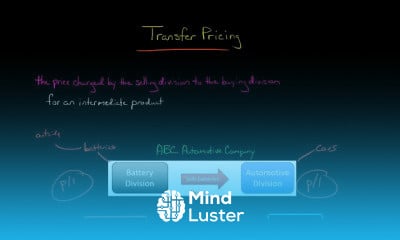
What is the purpose of transfer pricing? A transfer price arises for accounting purposes when related parties, such as divisions within a company or a company and its subsidiary, report their own profits. When these related parties are required to transact with each other, a transfer price is used to determine costs.What is transfer pricing example? Transfer pricing is the setting of the price for goods and services sold between controlled (or related) legal entities within an enterprise. For example, if a subsidiary company sells goods to a parent company, the cost of those goods paid by the parent to the subsidiary is the transfer price.What is transfer pricing and why is it important? A transfer price is also essential to come up with a fair and equitable price when the transaction takes place between two common entities. Transfer price helps with the accounting of transactions with familiar entities. It, in turn, helps to determine their profit or loss
 To Register in Course you have to watch at least 30 Second of any lesson
 Understand the principles and purpose of transfer pricing in multinational corporations and related-party transactions
Apply transfer pricing methods to determine fair and compliant prices for intra-company goods and services
Analyze the impact of transfer pricing on financial statements, profit allocation, and tax obligations
Evaluate transfer pricing regulations and compliance requirements across different jurisdictions
Develop strategies to optimize transfer pricing policies for tax efficiency and risk management
Identify common transfer pricing issues and implement solutions to address disputes and audits
Utilize transfer pricing documentation to support transparency and regulatory adherence
Assess the role of transfer pricing in global business operations and corporate financial planning
11 Lessons • 59 m total
You must have an
Account
on the platform.
Complete all lessons.
Watch at least 50% of Lesson Duration.
Get your Certificate free 🎉 !
4.6
 (69 reviews)
Overall rating

Be the First One Review This Course
Thank you

good one
informative, useful, and enriching.
Thanks
Great course
Thanks

good
Great course.

Good course

Nice course

Good

Good

What is the purpose of transfer pricing? A transfer price arises for accounting purposes when related parties, such as divisions within a company or a company and its subsidiary, report their own profits. When these related parties are required to transact with each other, a transfer price is used to determine costs.What is transfer pricing example? Transfer pricing is the setting of the price for goods and services sold between controlled (or related) legal entities within an enterprise. For example, if a subsidiary company sells goods to a parent company, the cost of those goods paid by the parent to the subsidiary is the transfer price.What is transfer pricing and why is it important? A transfer price is also essential to come up with a fair and equitable price when the transaction takes place between two common entities. Transfer price helps with the accounting of transactions with familiar entities. It, in turn, helps to determine their profit or loss
Experience the full power of Mindluster with Premium.
No distractions, just pure education.
Cancel your subscription anytime