
 9 Lessons
 94 Students



Dr.Ghvs Sarma
Very Informative
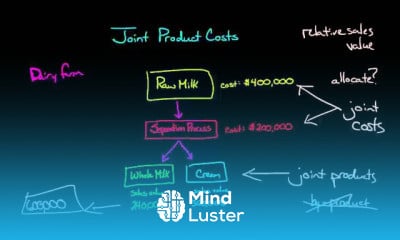
A joint cost is a cost that benefits more than one product, while a by-product is a product that is a minor result of a production process and which has minor sales.Are joint costs allocated to by products? Joint Cost Allocation Allocate joint costs to the primary output products of the joint process, not the incidental byproducts or scrap. Allocate them using a physical measure or a monetary measure.What are examples of joint products? Examples. The processing of crude oil can result in the joint products naphtha, gasoline, jet fuel, kerosene, diesel, heavy fuel oil and asphalt, as well as other petrochemical derivatives. The refinery process has variable proportions depending on the distilling temperatures and cracking intensity.What is joint cost example? A joint cost is a kind of common cost that occurs after a raw product, such as a sunflower crop, undergoes two separate production processes. For example, the cost of fertilizing and harvesting sunflowers qualifies as a common cost. ... Another example of joint costing is feeding both sheep and cattle.
 To Register in Course you have to watch at least 30 Second of any lesson
 Understand how to identify and classify joint costs and by-products in manufacturing processes using real-world examples
Apply appropriate methods to allocate joint costs to primary products using physical and monetary measures
Analyze the impact of joint costs on product costing, pricing, and profitability in various industries like oil refining and agriculture
Evaluate different strategies for allocating costs to by-products and scrap to optimize financial reporting and decision-making
Calculate joint costs and allocate them accurately to multiple products in complex production scenarios
Develop practical skills to distinguish between joint products, by-products, and incidental outputs in cost accounting
9 Lessons • 54 m total
 You must have an
Account
on the platform.
Complete all lessons.
Watch at least 50% of Lesson Duration.
Get your Certificate free 🎉 !
3.8
 (4 reviews)
Overall rating

Be the First One Review This Course
Very Informative

Good
I gained deep insights from the course
g

Good

Good
It was good
Wonderful experience

So many ads in between

Nice

A joint cost is a cost that benefits more than one product, while a by-product is a product that is a minor result of a production process and which has minor sales.Are joint costs allocated to by products? Joint Cost Allocation Allocate joint costs to the primary output products of the joint process, not the incidental byproducts or scrap. Allocate them using a physical measure or a monetary measure.What are examples of joint products? Examples. The processing of crude oil can result in the joint products naphtha, gasoline, jet fuel, kerosene, diesel, heavy fuel oil and asphalt, as well as other petrochemical derivatives. The refinery process has variable proportions depending on the distilling temperatures and cracking intensity.What is joint cost example? A joint cost is a kind of common cost that occurs after a raw product, such as a sunflower crop, undergoes two separate production processes. For example, the cost of fertilizing and harvesting sunflowers qualifies as a common cost. ... Another example of joint costing is feeding both sheep and cattle.
Experience the full power of Mindluster with Premium.
No distractions, just pure education.
Cancel your subscription anytime