

Apurva Karanam
GOOD
 (102 reviews)
 6 Lessons
 279 Students
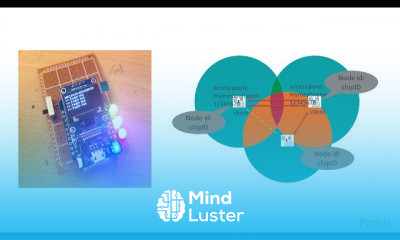
Wireless Sensor Networks (WSNs) can be defined as a self-configured and infrastructure-less wireless networks to monitor physical or environmental conditions, such as temperature, sound, vibration, pressure, motion or pollutants and to cooperatively pass their data through the network to a main location or sink where .
 To Register in Course you have to watch at least 30 Second of any lesson
 Design and deploy wireless sensor networks using ESP32 for environmental monitoring and data collection
Configure ESP32-based sensors for real-time temperature, humidity, motion, and pollutant detection in wireless networks
Implement data transmission protocols and optimize power consumption in ESP32 wireless sensor systems
Troubleshoot connectivity issues and ensure reliable data transfer in ESP32 wireless sensor networks
Integrate ESP32 sensors with cloud platforms for remote monitoring and data analysis
Develop scalable and secure wireless sensor network architectures using ESP32 for IoT applications
6 Lessons • 40 m total
 You must have an
Account
on the platform.
Complete all lessons.
Watch at least 50% of Lesson Duration.
Get your Certificate free 🎉 !
4.4
(102 reviews)
Overall rating

Be the First One Review This Course
GOOD

Super

Mmmmmm
Good
it was very good
Good

Good
It was good
Good

Good

Good

Good

Wireless Sensor Networks (WSNs) can be defined as a self-configured and infrastructure-less wireless networks to monitor physical or environmental conditions, such as temperature, sound, vibration, pressure, motion or pollutants and to cooperatively pass their data through the network to a main location or sink where .
Experience the full power of Mindluster with Premium.
No distractions, just pure education.
Cancel your subscription anytime