
pooja daware
Very nice
 (46 reviews)
 50 Lessons
 666 Students
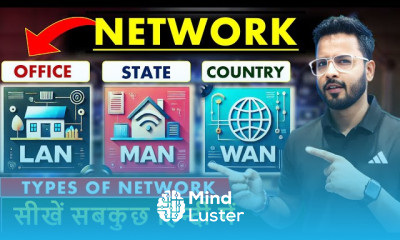
This Computer Networking Fundamentals course is designed to give learners a solid foundation in the essential concepts of modern networking. Whether you are a beginner or looking to strengthen your IT skills, this course will guide you step by step through key topics such as network types, topologies, the OSI and TCP/IP models, IP addressing, subnetting, and common network protocols like HTTP, DNS, and FTP. You will also explore how data is transmitted across networks, understand the basics of routing and switching, and gain insights into network security principles. Throughout the course, you will learn through clear explanations and practical examples that make complex concepts easy to understand. By the end of this course, you will be able to identify network components, troubleshoot basic connectivity issues, and build a strong base for advanced networking studies or IT career paths. This course is ideal for students, beginners, and anyone interested in starting a career in networking or information technology.
 To Register in Course you have to watch at least 30 Second of any lesson
 Understand the functions of routers, switches, hubs, and modems in computer networks for effective network management
Identify different types of network devices and their roles in establishing secure, scalable, and reliable networks
Configure and troubleshoot common network devices to optimize network performance and connectivity
Explain the importance of firewalls, access points, and repeaters in network security and coverage
Analyze network device specifications to select appropriate hardware for specific networking needs
Implement best practices for maintaining and upgrading network devices to ensure network efficiency and security
50 Lessons • 4 h 27 m total

 You must have an
Account
on the platform.
Complete all lessons.
Watch at least 50% of Lesson Duration.
Get your Certificate free 🎉 !
4.5
(46 reviews)
Overall rating

Be the First One Review This Course
Very nice

this course really helped me for my college exam preparation.

It was a good experience

Very helpful

Very nice

NA
Good
The course was very informative and well-structured. The concepts of OSI layers, protocols, and network topologies were explained clearly and made easy to understand. Great learning experience.
Nice Course

nice course

GOOD EXPERIENCE

excellent

This Computer Networking Fundamentals course is designed to give learners a solid foundation in the essential concepts of modern networking. Whether you are a beginner or looking to strengthen your IT skills, this course will guide you step by step through key topics such as network types, topologies, the OSI and TCP/IP models, IP addressing, subnetting, and common network protocols like HTTP, DNS, and FTP. You will also explore how data is transmitted across networks, understand the basics of routing and switching, and gain insights into network security principles. Throughout the course, you will learn through clear explanations and practical examples that make complex concepts easy to understand. By the end of this course, you will be able to identify network components, troubleshoot basic connectivity issues, and build a strong base for advanced networking studies or IT career paths. This course is ideal for students, beginners, and anyone interested in starting a career in networking or information technology.
Experience the full power of Mindluster with Premium.
No distractions, just pure education.
Cancel your subscription anytime