
Many people want to change their career path and enter the field of web design, but some believe that not having a specialized university degree may prevent them from achieving this goal. In fact, there is no need to worry, as you can begin your journey toward becoming a professional web designer even if you only have a high school diploma. Practical skills, experience, and continuous training are the key factors for success in this field.
Through the MindLuster platform, you can benefit from a wide range of valuable courses that help you learn the essential skills of web design, starting with design principles and user experience and progressing to creating professional, responsive websites that work effectively across different devices.
Who Is a Web Designer and What Does Their Job Involve?
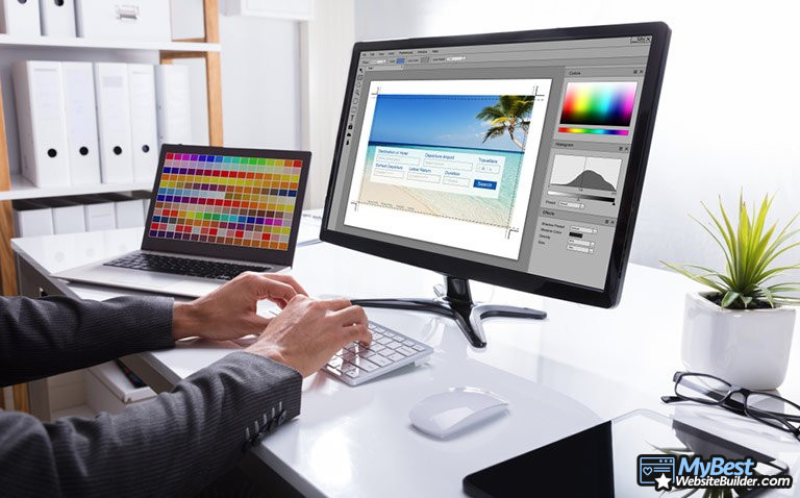
A web designer creates the visual identity of your brand through your website. They focus on coordinating colors, fonts, images, menus, and buttons, as well as designing attractive and user-friendly interfaces.
The responsibilities of a web designer include:
Designing website pages and defining their overall appearance.
Creating user-friendly interfaces that are responsive across mobile devices and computers.
Selecting colors, fonts, and images that align with the website’s brand identity.
Creating prototypes using tools such as Figma or Adobe XD.
Applying user interface and user experience principles, known as UI/UX.
Collaborating with web developers to transform the design into a fully functional website.
Reviewing and improving the design based on users’ needs and feedback.
A web designer may also have a basic understanding of HTML, CSS, and JavaScript. However, their role differs from that of a web developer. A web designer focuses on the website’s appearance and user experience, while a web developer focuses on programming the website and ensuring that its features function correctly.
The Difference Between a Web Designer and a Web Developer
Have you ever wondered who is behind the impressive design of websites and who makes them function efficiently? The answer is: the web designer and the web developer.
Let us take you, dear reader, on a brief journey to understand the role of each one.
A web designer is responsible for creating the website’s visual appearance and building the brand’s visual identity. Their work includes designing page layouts, organizing content, selecting colors, fonts, images, and menus, as well as ensuring that the website displays properly on mobile devices and computers.
A web developer, on the other hand, writes the code that makes the website function. Their responsibilities may include creating user accounts, developing login systems, connecting the website to databases, and adding payment systems, search tools, and other features.
MindLuster offers a diverse range of educational courses designed for web developers, helping them learn the fundamentals of web development and master skills such as HTML, CSS, and JavaScript.
To begin your career as a Web Designer, you should first choose the specialization that best matches your skills and interests. One person may combine both web design and web development, but doing so requires mastering creative and technical skills at the same time.
Is Web Design in Demand in the Job Market in 2026?
Yes, web design is one of the fields in demand in the job market in 2026, due to the growing need of companies, e-commerce stores, and digital platforms for attractive, fast, and user-friendly websites. The role of a web designer is no longer limited to choosing colors and arranging page layouts. It now also includes designing user experiences, creating responsive interfaces, improving accessibility, and understanding users’ needs.
According to data from the U.S. Bureau of Labor Statistics, employment for web developers and digital designers is projected to grow by 7% between 2024 and 2034, with approximately 14,500 job openings expected each year on average. This growth rate is faster than the average for all occupations.
You should not be concerned about the emergence of artificial intelligence tools and no-code website-building platforms. The need for web designers has not disappeared; instead, the profession has become more specialized. Therefore, web designers in 2026 need to continuously develop their skills and keep up with the latest tools and trends.
How Can You Learn Web Design Without a University Degree?
You can become a successful web designer without earning a specialized university degree, because most employers and clients care more about your practical skills, the quality of your designs, and the projects you have completed than your academic qualifications. Therefore, you need to follow a clear learning plan that combines studying the fundamentals with continuous practical application.
Do not limit yourself to watching theoretical lessons. Make sure to apply everything you learn by working on a variety of projects, such as designing a personal website, a landing page, a company website, an online store, and an educational platform. These projects will help you develop your skills, understand the web design process, and gain the practical experience needed to meet job market requirements.
Next, create a professional portfolio that showcases your best designs while explaining the stages of each project, the problem you aimed to solve, and the final outcome you achieved. You can publish your work on platforms such as Behance or create a personal website to present your experience, skills, and services.
Throughout this article, we have explored the most important skills, tools, and steps that can help you become a professional web designer. By continuing to learn, practice, and complete real-world projects, you can build a successful career in web design without needing a university degree.
Essential Skills to Become a Professional Web Designer
To become a web designer, having a good artistic sense is not enough. You also need a combination of creative and technical skills that will help you design attractive, user-friendly websites.
The most important skills a web designer needs include:
Understanding design principles: such as balance, consistency, white space, and the proper arrangement of elements within a page.
Choosing colors and fonts: in a way that matches the brand identity and improves content readability.
UI/UX design: to create easy-to-navigate pages that meet users’ needs.
Mastering design tools: such as Figma and Adobe XD for creating interfaces and prototypes.
Learning HTML and CSS: to understand how web pages are built and how designs are transformed into functional interfaces.
Knowing the basics of JavaScript: to understand interactive elements and animations used on websites.
Responsive design: to ensure that websites display properly on smartphones, tablets, and computers.
Understanding the basics of SEO: to design well-structured, fast-loading pages that can help websites rank higher in search results.
Paying attention to website speed and accessibility: by using optimized images and creating clear designs that are accessible to all users.
Communication and teamwork skills: to collaborate effectively with clients and web developers and understand project requirements.
To develop these skills, you should practice consistently by working on real projects, analyzing successful websites, and building a professional portfolio that demonstrates your abilities and experience in web design.
Now that we have explored the essential skills that prepare you to enter the field of web design, it is time to discover the practical steps that can help you become a web designer.
How to Become a Professional Web Designer
To become a professional web designer, you should understand that web design does not depend solely on your talent or creativity. A web designer must also understand design principles, master modern tools, and have the ability to create attractive, user-friendly websites.
Start by learning the fundamentals of web design, such as page layout, color and font selection, the use of white space, and arranging elements in a way that helps users navigate the website easily. Next, learn the principles of UI/UX design to understand visitors’ needs and create a comfortable and effective user experience.
It is also important to master design tools such as Figma, which helps you design website interfaces and create prototypes before the development stage begins. Learning the basics of HTML and CSS is also recommended so you can understand how web pages are built, along with some basic JavaScript to learn how interactive elements are added.
To improve your skills, work on a variety of projects, such as a personal website, an online store, an educational platform, and a company website. Make sure to apply responsive design principles so that your websites display properly on both mobile devices and computers.
After completing several projects, create a professional portfolio that showcases your best designs and explains your design process for each project. You should also keep up with the latest web design trends, analyze successful websites, and continue developing your skills.
You can benefit from the courses available on the MindLuster platform to learn web design step by step, gain the essential skills needed to build professional projects, and begin your career in this field.
How Much Does a Web Designer Earn?
A web designer’s salary varies depending on years of experience, work location, skill level, and the types of projects they handle. Salary data reported in Cairo and Giza during 2026 indicates that a web designer with one to three years of experience may earn approximately between EGP 14,000 and EGP 17,000 per month. However, these figures should be treated as estimates.
The salary may increase as the designer gains more experience and masters additional skills, such as UI/UX design, Figma, responsive design, and HTML, CSS, and JavaScript. For example, the average total salary of a front-end developer in Cairo is around EGP 14,000 per month, while reported salaries range approximately from EGP 9,000 to EGP 22,000 per month.
In the United States, the official median annual wage for web and digital interface designers was $98,090 per year, according to the latest data published by the U.S. Bureau of Labor Statistics for May 2024.
Best Freelance Websites for Web Designers in 2026
In conclusion, to become a professional web designer, you should begin by following a comprehensive learning plan that combines essential skills, mastery of modern design tools, and practical experience through a variety of projects. Do not rely solely on watching lessons; make sure to practice continuously and build a strong portfolio that reflects your skills and experience. By continuing to learn and keeping up with the latest web design trends, you can enter the field professionally and build a successful career.
Frequently Asked Questions About Becoming a Web Designer in 2026
1. Can I become a web designer without a university degree?
Yes, you can become a web designer without a university degree. Most employers and clients focus on your practical skills, portfolio, creativity, and ability to create user-friendly websites.
2. How long does it take to become a web designer?
It may take between three and twelve months to learn the essential skills, depending on your learning schedule and the amount of time you spend practicing. Becoming highly skilled requires continuous learning and real project experience.
3. Do web designers need to learn coding?
Web designers do not always need advanced coding skills, but learning HTML and CSS is highly recommended. Basic knowledge of JavaScript can also help you understand how interactive website elements work.
4. What skills are required to become a web designer?
A web designer needs skills in layout design, typography, color selection, responsive design, UI/UX principles, and design tools such as Figma. Communication, creativity, and problem-solving skills are also important.
5. What are the best tools for web designers in 2026?
Popular web design tools include Figma, Adobe Photoshop, Adobe Illustrator, Webflow, WordPress, Framer, and Canva. The best tool depends on the type of website and the designer’s workflow.
6. Will artificial intelligence replace web designers?
Artificial intelligence is changing the way web designers work, but it is unlikely to replace skilled designers completely. Designers can use AI tools to generate ideas, automate repetitive tasks, and improve their workflow.
7. How do I create a web design portfolio?
Choose your best projects and explain the design process for each one, including the problem, research, wireframes, design decisions, and final result. You can publish your portfolio on Behance or create your own website.