
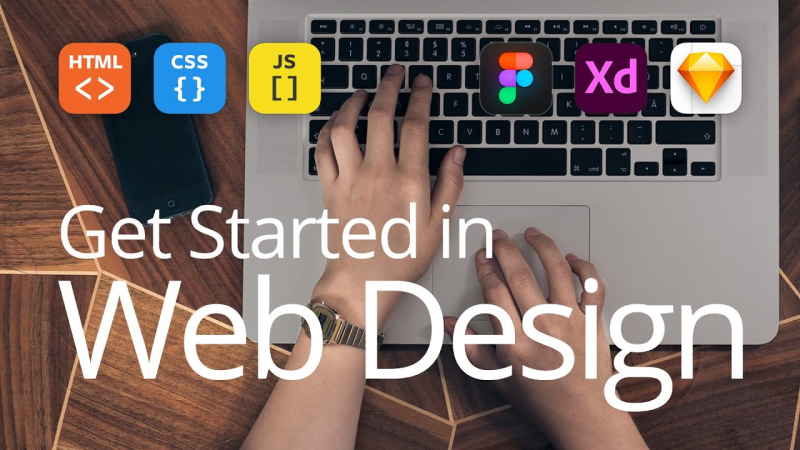
Creating a website is one of the most important steps toward building a successful brand. It provides you with a professional space to showcase your services, introduce your business, and reach a wider audience online.
For this reason, learning web design has become one of the most in-demand skills today, especially as companies and individuals increasingly rely on websites for marketing, displaying products and services, and communicating with customers. If you are a beginner and do not know where to start, this guide from mindluster will take you on a journey to learn web design from scratch, beginning with the fundamentals of HTML and CSS and progressing to the creation of attractive, responsive websites that work efficiently across different devices. This will help you design your first website and begin your professional career in this field.
To begin, let us first understand the difference between web design and web development.
What Is Web Design?
Web design is the process of creating and planning websites, with a focus on their visual appearance and the organization of content in an attractive and user-friendly way. It includes choosing colors, fonts, and images, as well as determining the placement of menus, buttons, and other elements within website pages. It also ensures that the website displays properly on both mobile devices and computers.
learning web design is based on two important aspects:
User Interface (UI): UI focuses on the website’s visual appearance, including its colors, fonts, images, buttons, and the arrangement of elements within each page.
User Experience (UX): UX focuses on how easy the website is to use, how quickly visitors can access information, and how pages are organized to provide a smooth, comfortable, and effective browsing experience.
What is the difference between web design and web development?
The main difference between web design and web development is that web design focuses on how a website looks, while web development focuses on how it works.
Web Design
Web design is concerned with the appearance and ease of use of a website. A web designer usually:
Chooses the colors, fonts, and images.
Designs pages, buttons, and menus.
Organizes the content clearly.
Creates the User Interface (UI).
Improves the User Experience (UX).
Uses tools such as Figma and Adobe XD.
Web Development
Web development turns the design into a real, working website. A web developer usually:
Writes code using HTML, CSS, and JavaScript.
Creates databases and login systems.
Adds features such as search, payment, and booking.
Connects the website to servers and APIs.
Uses programming languages such as PHP, Python, and JavaScript.
Simply put, a web designer decides how the website should look and feel, while a web developer writes the code that makes it work.
Why Should You Learn Web Design?
The success of your brand can depend greatly on having a professional website, as it allows you to present your products or services in an organized and attractive way. Customers usually search for businesses online before making a purchase decision, and not having a website may reduce their trust in your brand’s credibility.
A professionally designed website also reflects the quality of your products or services and helps build a strong and trustworthy brand image. In addition, a well-designed website provides a smooth and convenient user experience, allowing visitors to access information and understand what you offer quickly. This can increase the chances of turning them into actual customers.
For this reason, learning web design has become an important skill in the digital age. Companies and individuals rely heavily on websites to promote their products and services and communicate with customers. This field also gives you the opportunity to combine creativity with technical skills, while allowing you to work for companies or begin a freelance career.
Learning web design can also help you create a personal website or a website for your business, design attractive and user-friendly interfaces, and build a professional portfolio. Furthermore, it opens the door to a variety of career opportunities and allows you to earn additional income in a field that continues to experience strong demand.
What Skills Are Required to Learning Web Design?
Learning web design requires a combination of two main types of skills: creative and design skills, and technical skills.
First: Creative and Design Skills
These skills help you create an attractive and user-friendly website. They include:
Understanding design principles and arranging elements within a page.
Choosing suitable colors, fonts, and images.
Designing the User Interface (UI).
Improving the User Experience (UX).
Creating clear and well-organized page layouts.
Using design tools such as Figma and Adobe XD.
Ensuring easy navigation and quick access to information.
Second: Technical Skills
These skills are necessary to implement the design and turn it into fully functional web pages. They include:
Learning HTML to build the basic structure of website pages.
Learning CSS to style colors, fonts, layouts, and page elements.
Learning the fundamentals of JavaScript to add interaction and animation.
Creating responsive designs that work well on mobile devices and computers.
Understanding website speed and performance optimization.
Learning the basic principles of Search Engine Optimization (SEO).
Using development tools such as Visual Studio Code and Git.
Combining creative and technical skills helps you build professional websites that offer an attractive appearance, ease of use, and strong performance.
The Most Important Tools for Learning Web Design
Web design tools vary depending on their purpose. They can be divided into tools for designing a website’s visual appearance, tools for coding and development, and tools for creating websites without writing code.
First: Tools for Designing the Website’s Visual Appearance
These tools are used to design website interfaces, choose colors, fonts, and images, and arrange page elements before the website is developed.
Second: Coding and Development Tools
These tools are used to write and run HTML, CSS, and JavaScript code and transform a design into a fully functional website.
Third: No-Code Website Design Tools
These tools help users create websites through drag-and-drop features and ready-made templates without requiring advanced programming knowledge.
For beginners, it is recommended to start with Figma to learn website interface design, then use Visual Studio Code to learn HTML, CSS, and JavaScript. Those who want to create a website quickly without learning programming can begin with WordPress, Webflow, or Wix.
MindLuster offers a wide range of high-quality courses that help you learn web design step by step.
How to Design a Professional Website Step by Step Using MindLuster as a Real Example
A beginner can design a professional website by following a few simple and organized steps. Website design does not begin with choosing colors or writing code; it begins with understanding the website’s purpose, its target users, and the features they need.
We will use MindLuster as a practical example because it includes clear elements that can be applied when designing educational platforms, such as course search, content categories, course pages, user registration, and certificates.
By following these simple steps, you can create a professional website:
1. Define the Website’s Purpose
First, ask yourself: What service will the website provide?
The purpose of MindLuster is to help users search for educational courses, study learning materials, and earn certificates. This goal is clearly presented through the homepage, search bar, and course lists.

2. Identify the Target Audience
Ask yourself:
Who will use the website?
What information are they looking for?
For an educational platform such as MindLuster, the target audience may include:
Students and beginners.
People who want to develop their skills.
Employees seeking to improve their career paths.
People searching for courses and certificates.
Instructors who want to share educational content.
Identifying the target audience helps you choose the appropriate content language, font sizes, page structure, and level of usability.
3. Define the Website’s Main Features
Before starting the design process, write a list of all the features users will need.
Some of the main features available on MindLuster include:
Searching for courses.
Browsing course categories.
Viewing the latest and most popular courses.
Creating an account and logging in.
Joining a course.
Following lessons and tracking progress.
Understanding certificate requirements.
Verifying certificates.
Creating a CV.
Reading articles and book summaries.
4. Create a Page Layout and Sitemap
Draw an initial layout on paper or use a tool such as Figma. Decide where each element will appear before selecting colors and visual styles.
The homepage can be organized in the following order:
Navigation Menu → Main Heading → Search Bar → Categories → Popular Courses → Latest Courses → Footer
The MindLuster homepage uses a clear heading, a search bar, and organized sections to display courses and different areas of study.
A sitemap also helps explain the relationship between the website’s main pages, such as:
Homepage.
Course categories.
Course listing pages.
Course details pages.
Lesson pages.
Registration and login.
User profile.
Certificates.

5. Choose the Visual Style and Colors
Define the website’s visual identity, including:
Primary and secondary colors.
Fonts.
Button styles.
Images and icons.
Spacing between elements.
The same visual style should be used across all pages to make the website look consistent, organized, and easy to understand.
6. Design Course Cards
A course card should provide the most important information users need to make a quick decision, such as:
Course image.
Category name.
Course title.
Instructor or content provider.
Rating.
Number of students.
Number of lessons.
Certificate availability.
Course cards in MindLuster’s popular courses section display information such as the course category, title, rating, number of learners, and certificate status.
7. Design the Course Details Page
When users click on a course, they should be taken to a page containing complete information, such as:
Course title.
Short description.
Learning outcomes.
Number of lessons.
Lesson list.
Registration or start-learning button.
Certificate requirements.
The Web Design for Beginners course page on MindLuster presents learning outcomes such as creating website layouts, applying responsive design, and improving visual appearance and user experience.

8. Turn the Design into a Functional Website
After completing the visual design, you can build the website using:
HTML to create the structure of the pages.
CSS to style colors, fonts, layouts, and page elements.
JavaScript to add interaction and dynamic features.
Those who want to create a website without writing much code can use platforms such as WordPress or Webflow.
9. Make the Website Mobile-Friendly
The website should display properly on computers, smartphones, and tablets.
Make sure that:
Text is clear and easy to read.
Buttons are easy to tap.
Images fit different screen sizes.
The navigation menu works properly on mobile devices.
Content cards do not overlap.
Page elements remain organized on smaller screens.
10. Test the Website
Before publishing the website, test:
All links and buttons.
The search function.
Account creation and login.
Forms.
Page loading speed.
The website’s appearance on different screen sizes.
For educational websites, you should also test:
Lesson playback.
Student progress tracking.
Certificate generation.
Certificate verification.
MindLuster provides a certificate verification page where users can enter a certificate number to confirm its validity.

11. Publish the Website
After completing the design and testing process:
Choose a suitable domain name.
Purchase a hosting service.
Upload the website files.
Activate an SSL security certificate.
Publish the website and monitor its performance.
Update the content regularly.
Conclusion
To design a professional website, begin by defining its purpose, target audience, pages, and main features. Then create the layout, choose the visual identity, design the content cards and detail pages, and finally build, test, and publish the website.
MindLuster is a clear example of how an educational platform can organize search tools, categories, courses, user accounts, learning progress, and certificates within one connected website.
Frequently Asked Questions About Learning Web Design
1. What is web design?
Web design is the process of planning and creating the visual appearance, structure, and user experience of a website. It includes choosing colors, fonts, images, layouts, buttons, and navigation elements.
2. Can beginners learn web design from scratch?
Yes, beginners can learn web design without previous experience. It is recommended to start with basic design principles, HTML, and CSS, then move on to JavaScript and practical projects.
3. What languages should I learn for web design?
The main languages used in web design are:
HTML for creating the structure of web pages.
CSS for styling colors, fonts, layouts, and elements.
JavaScript for adding interaction and dynamic features.
4. Do I need programming skills to become a web designer?
Basic coding knowledge is helpful, especially HTML and CSS. However, you can also create websites using no-code tools such as WordPress, Webflow, Wix, or Elementor.
5. What is the difference between web design and web development?
Web design focuses on how a website looks and how users interact with it. Web development focuses on writing the code and building the functions that make the website work.
6. What tools are commonly used in web design?
Popular web design tools include Figma, Adobe XD, Visual Studio Code, CodePen, Chrome DevTools, WordPress, and Webflow.
7. How long does it take to learn web design?
The learning time depends on your goals and how often you practice. A beginner can understand the basics within a few months, but becoming a professional requires continuous learning and practical experience.
8. What is responsive web design?
Responsive web design means creating a website that adjusts automatically to different screen sizes, including smartphones, tablets, laptops, and desktop computers.
9. What are UI and UX in web design?
User Interface (UI) focuses on the visual elements of a website, such as colors, buttons, fonts, and layouts. User Experience (UX) focuses on making the website easy, clear, and comfortable to use.
10. Can I learn web design for free?
Yes, many platforms provide free web design courses, tutorials, coding exercises, and practical projects. MindLuster offers a wide range of courses that can help beginners learn web design step by step.