

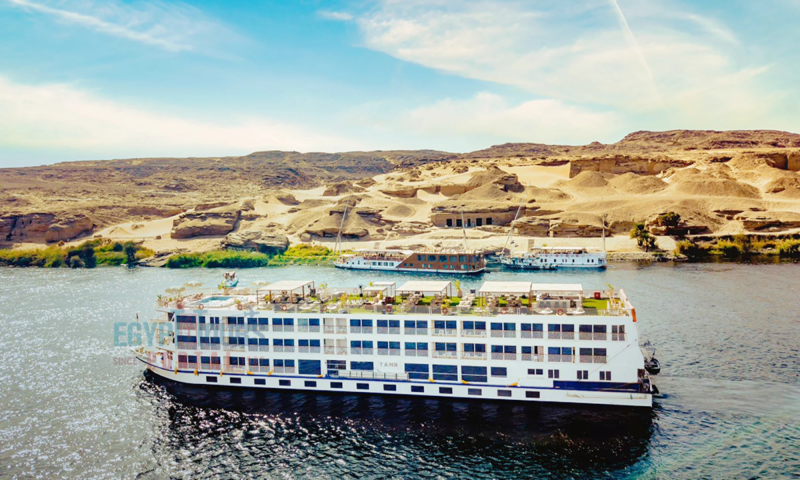
There's a reason almost every seasoned traveler says the same thing about Egypt: you haven't really seen the country until you've seen it from the water. The Nile isn't just scenery here, it's the reason Egyptian civilization exists where it does, and a multi-day cruise between Luxor and Aswan remains the single best way to connect the dots between temples, tombs, and daily life along its banks without burning half your trip on road transfers.
This guide breaks down the best Nile River cruises in Egypt for 2026, the main routes, how to choose between a classic cruise ship and a traditional dahabiya, what to expect on board, and how travelers from Australia and the US can book the right one through Small Group Egypt Tours with EgyptianTrips.
Why a Nile Cruise Is Worth Building Your Trip Around
A Nile cruise solves a problem that trips up a lot of first-time Egypt visitors: the country's most important ancient sites aren't clustered in one city. Luxor alone holds the Karnak and Luxor Temples, the Valley of the Kings, and the Valley of the Queens.
Aswan has the Temple of Philae and the High Dam. Edfu and Kom Ombo sit between the two. Driving this route and backtracking for hotel stays eats up days that a cruise simply absorbs into the itinerary, you sleep while the boat moves, and wake up moored near the next site.
It's also, for many Australian and American travelers, the part of an Egypt trip that feels the most different from home. Unhurried mornings on deck, tea service as the boat glides past palm groves and small riverside villages, and golden-hour views of temples lit up at sunset are hard to replicate anywhere else in the world.
The Two Main Nile Cruise Routes
Luxor to Aswan (or Aswan to Luxor) This is the classic route and the one most first-time visitors should book. Standard itineraries run 3 to 5 nights and include stops at the Temple of Edfu (dedicated to the falcon god Horus) and the unusual double temple at Kom Ombo, shared between the crocodile god Sobek and the falcon god Horus. Most cruise ships run this route in one direction, so check whether your package includes return transport.
Lake Nasser Cruises (Aswan to Abu Simbel) A smaller, less crowded alternative that sails the reservoir created by the Aswan High Dam, ending at the colossal rock temples of Abu Simbel. Fewer ships operate here, departures are less frequent, and itineraries typically run 3 to 4 nights, a good option for travelers who've already done the Luxor–Aswan route or want a quieter trip with fewer stops but more dramatic desert scenery.
Choosing Your Boat: Cruise Ship vs. Dahabiya vs. Felucca
Not all Nile cruises look the same, and the type of boat changes the trip more than most people expect.
Standard Nile cruise ships are the most common option: multi-deck vessels with 60 to 150 cabins, air conditioning, a pool, a restaurant, and an included guide for shore excursions.
These suit travelers who want comfort, a predictable schedule, and group excursions handled for them, which is why they're the backbone of most Egypt Tour Packages with EgyptianTrips.
Dahabiyas are traditional twin-masted sailing boats, much smaller (often under 12 cabins), slower-paced, and considerably more intimate. They dock in places large ships can't reach and tend to attract travelers who want a quieter, more immersive experience over sheer efficiency. Because they rely partly on wind and carry so few passengers, dahabiya itineraries run with more flexibility but at a higher nightly cost.
Feluccas are small traditional sailboats, generally used for short sunset outings or overnight camping trips rather than full multi-day itineraries. They're a worthwhile add-on experience, not a substitute for a proper Luxor–Aswan cruise.
Comparing Nile Cruise Options
What's Included on a Typical Nile Cruise
Most mid-range to upscale Nile cruise packages include full board (breakfast, lunch, and dinner), an English-speaking Egyptologist guide for shore excursions, entrance fees to the major included sites, and onboard entertainment such as a traditional galabeya party or Nubian music night. What's usually extra: alcoholic drinks, optional excursions like a hot air balloon ride over Luxor, tipping (baksheesh is customary throughout Egypt), and sometimes the entry ticket to the inner tombs in the Valley of the Kings beyond the standard three included.
Always confirm what's bundled before booking, this is one of the most common sources of unexpected costs on an otherwise well-planned trip.
Best Time of Year for a Nile Cruise
October through April offers the most comfortable cruising weather, with daytime temperatures generally between 20–28°C (68–82°F) in Upper Egypt. December and January are the coolest and busiest months, particularly with Australian and American travelers using the Christmas and New Year break, so book several months ahead if you're targeting that window. May through September brings serious heat, frequently above 38°C (100°F) in Luxor and Aswan, which some travelers actually prefer for thinner crowds and lower prices, provided you pace shore excursions around the cooler morning and late-afternoon hours.
How to Fit a Nile Cruise Into a Wider Egypt Itinerary
A Nile cruise works best as one leg of a longer Egypt trip rather than the whole trip itself. A common and efficient structure looks like this:
Cairo and Giza (2–3 days), the Pyramids, the Sphinx, the Egyptian Museum or the Grand Egyptian Museum.
Fly to Luxor or Aswan to begin the cruise rather than taking an overnight train, which saves a travel day.
3–5 night Nile cruise between Luxor and Aswan.
Optional extension to the Red Sea (Hurghada) or Alexandria for travelers with extra time.
For Australian and American travelers in particular, the flight time to Egypt is long enough that it's worth building a trip of at least 8 to 10 days total to justify the journey, a short 4-night cruise bolted onto a rushed 2-day Cairo stop tends to leave people feeling like they only scratched the surface.
If you'd rather not piece an itinerary together yourself, this is exactly where Egypt Tour Packages with EgyptianTrips come in, pre-built, fully guided routes that combine Cairo, a Nile cruise, and optional Red Sea or Alexandria extensions into one coordinated booking, with flights, transfers, and entrance fees handled for you.
Small Group Tours vs. Private Nile Cruises
Nile cruise ships themselves are shared vessels, but the shore excursions and surrounding itinerary don't have to be. Small Group Egypt Tours with EgyptianTrips cap group sizes to keep temple visits manageable and guides genuinely interactive, which matters more than people expect, a group of 30 shuffling through the Valley of the Kings has a very different experience than a group of 10. Travelers who prefer more flexibility, or who are celebrating a honeymoon or milestone trip, can also arrange private guiding on the same cruise ship itinerary, which keeps the comfort of a standard vessel while personalizing the pace of each stop.
Don't Have Time for a Full Cruise? Consider a Day Tour
Not every traveler has 4 or 5 days to spare for a full cruise, particularly those on a tighter Egypt itinerary or combining the trip with other Middle East or African destinations. Egypt Day Tours with EgyptianTrips cover highlights like Luxor's East and West Banks, or a short Nile felucca sail, as single-day add-ons from Luxor, Aswan, or even as part of a longer Cairo-based itinerary with a flight down and back. It's a reasonable compromise if a multi-night cruise doesn't fit your schedule, though it won't replicate the slower, more immersive feel of actually sleeping aboard the boat as it moves between sites.
Frequently Asked Questions
How many days should a Nile cruise be?
Most travelers find 4 nights the sweet spot, enough time to properly see Luxor, Edfu, Kom Ombo, and Aswan without feeling rushed. Three-night cruises work for tighter schedules, while 5-night itineraries add more relaxed pacing and sometimes extra stops.
Is a Nile cruise worth it if I've already seen Cairo and the pyramids?
Yes. Cairo and the Nile Valley are genuinely different experiences, Cairo centers on the pyramids and museums, while a Nile cruise covers Luxor's temples and tombs, the Valley of the Kings, and the riverside temples at Edfu and Kom Ombo, none of which overlap with a Cairo-only trip.
What's the difference between a Nile cruise and a dahabiya?
A standard Nile cruise ship carries 60–150 passengers with hotel-style amenities and a fixed schedule. A dahabiya is a small traditional sailing boat carrying around 8–12 guests, offering a slower, more intimate experience at a higher nightly cost.
Do Nile cruises run during summer?
Yes, though temperatures in Luxor and Aswan can exceed 38°C (100°F) between May and September. Cruises still operate, air-conditioned cabins and shaded decks make it manageable, and prices are typically lower than in the peak winter months.
Can Australians and Americans book a Nile cruise as part of a package tour?
Yes, this is the most common way international travelers book, since it bundles flights, transfers, guiding, and entrance fees into one itinerary. Egypt Tour Packages with EgyptianTrips are built specifically around this kind of end-to-end planning for travelers coming from Australia and the US.