
 47 Lessons
 984 Students










Ashenafie Tesgaye
Perfect
Mechanics. Motion and its causes; interactions between objects. Thermodynamics. Heat and temperature. Vibrations and Waves Phenomena. Specific types of repetitive motions- springs, pendulums, sound. Optics. Light (including mirrors), lenses, colors. Electromagnetism. ... Relativity. ... 1 Classical mechanics. 2 Thermodynamics and statistical mechanics. 3 Electromagnetism and photonics. 4 Relativistic mechanics. 5 Quantum mechanics, atomic physics, and molecular physics. 6 Optics. 7 Condensed matter physics. 8 High-energy particle physics and nuclear physics. What is basic of physics? Physics is a natural science that involves the study of matter and its motion through space and time, along with related concepts such as energy and force. Matter is generally considered to be anything that has mass and volume. ... These laws of nature are rules that all natural processes appear to follow. What are the 4 basic laws of physics? The 4 most fundamental physics concepts Classical mechanics (the laws of motion) If you've studied any sort of science, you've probably heard the story of Isaac Newton sitting under an apple tree and formulating the basic laws of motion. ... Electromagnetism. ... Relativity. ... Thermodynamics. What are the 2 types of physics? There are Two Main Branches of Physics, Classical Physics and Modern Physics Who named physics? He wrote the first work which refers to that line of study as "Physics" – in the 4th century BCE, Aristotle founded the system known as Aristotelian physics. He attempted to explain ideas such as motion (and gravity) with the theory of four elements. What is the hardest branch of physics? Top Ten Hardest Physics Topics Quantum Mechanics. I love physics but to say some of it's laws are just too much hard. ... Electromagnetism. ... Projectile Motion. ... String Theory. ... Electronics. ... General Relativity. ... Relative Velocity. ... Radiation. Can I study physics on my own? You should really work out problems on your own. If you just watch videos online or read book chapters, you might be convinced that you understand the physics but from my experience it's a wrong feeling. Doing problem sets is the best (and only) way to really master the subject.
 To Register in Course you have to watch at least 30 Second of any lesson
 Understand fundamental principles of classical mechanics, including laws of motion and force interactions in real-world systems
Apply thermodynamics concepts to analyze heat transfer, temperature changes, and energy conservation in practical scenarios
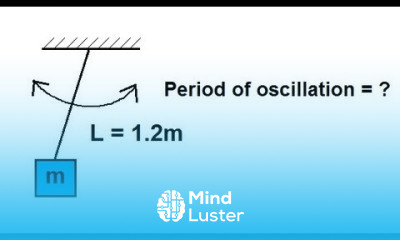
Describe the behavior of vibrations and waves, including sound, pendulums, and spring motions, in various physical contexts
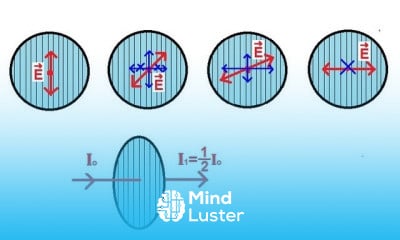
Explain the principles of optics, including light reflection, refraction, lenses, and color phenomena in everyday applications
Demonstrate knowledge of electromagnetism, including electric and magnetic fields, and their role in modern technology
Analyze relativistic effects and their implications for high-speed motion and modern physics experiments
Utilize quantum mechanics concepts to understand atomic and molecular structures and behaviors
Describe condensed matter physics principles relevant to materials science and solid-state devices
Evaluate high-energy particle physics and nuclear physics phenomena in natural and experimental settings
Apply physics problem-solving skills to real-world situations using mathematical models and experimental data
Develop critical thinking skills to interpret physical phenomena and scientific research findings
Communicate complex physics concepts clearly and effectively for academic and professional audiences
47 Lessons • 7 h 28 m total

 You must have an
Account
on the platform.
Complete all lessons.
Watch at least 50% of Lesson Duration.
Get your Certificate free 🎉 !
4.5
 (37 reviews)
Overall rating

Be the First One Review This Course
Perfect

Excellent clearly spoken very informative

Excellent

One of my favorite courses!

Thank you very informative

Thank you! Very informative
Engaging and Accessible: Many viewers appreciate the series for its engaging presentation and ability to simplify complex ideas. For instance, a review on Class Central notes, "Great great great course for basic physics concept. I enjoyed it very much

Good course

Excellent

Excellent
excellent course

FDF

Mechanics. Motion and its causes; interactions between objects. Thermodynamics. Heat and temperature. Vibrations and Waves Phenomena. Specific types of repetitive motions- springs, pendulums, sound. Optics. Light (including mirrors), lenses, colors. Electromagnetism. ... Relativity. ... 1 Classical mechanics. 2 Thermodynamics and statistical mechanics. 3 Electromagnetism and photonics. 4 Relativistic mechanics. 5 Quantum mechanics, atomic physics, and molecular physics. 6 Optics. 7 Condensed matter physics. 8 High-energy particle physics and nuclear physics. What is basic of physics? Physics is a natural science that involves the study of matter and its motion through space and time, along with related concepts such as energy and force. Matter is generally considered to be anything that has mass and volume. ... These laws of nature are rules that all natural processes appear to follow. What are the 4 basic laws of physics? The 4 most fundamental physics concepts Classical mechanics (the laws of motion) If you've studied any sort of science, you've probably heard the story of Isaac Newton sitting under an apple tree and formulating the basic laws of motion. ... Electromagnetism. ... Relativity. ... Thermodynamics. What are the 2 types of physics? There are Two Main Branches of Physics, Classical Physics and Modern Physics Who named physics? He wrote the first work which refers to that line of study as "Physics" – in the 4th century BCE, Aristotle founded the system known as Aristotelian physics. He attempted to explain ideas such as motion (and gravity) with the theory of four elements. What is the hardest branch of physics? Top Ten Hardest Physics Topics Quantum Mechanics. I love physics but to say some of it's laws are just too much hard. ... Electromagnetism. ... Projectile Motion. ... String Theory. ... Electronics. ... General Relativity. ... Relative Velocity. ... Radiation. Can I study physics on my own? You should really work out problems on your own. If you just watch videos online or read book chapters, you might be convinced that you understand the physics but from my experience it's a wrong feeling. Doing problem sets is the best (and only) way to really master the subject.
Experience the full power of Mindluster with Premium.
No distractions, just pure education.
Cancel your subscription anytime