Course Description
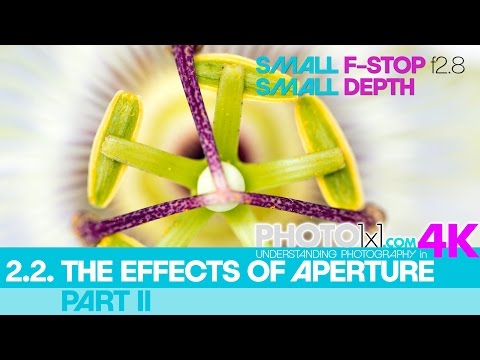
How does aperture affect depth of field?
The f-stops work as inverse values, such that a small f/number (say f/2.8) corresponds to a larger or wider aperture size, which results in a shallow depth of field; conversely a large f/number (say f/16) results in a smaller or narrower aperture size and therefore a deeper depth of field. ...What does adjusting the aperture do?
A higher aperture (e.g., f/16) means less light is entering the camera. This setting is better for when you want everything in your shot to be in focus — like when you're shooting a group shot or a landscape. A lower aperture means more light is entering the camera, which is better for low-light scenarios.What happens if aperture is increased?
When you increase the aperture value the aperture opening inside the lens gets smaller, reducing the amount of light that can enter the camera. Similarly, when you decrease the aperture value the opening gets bigger, allowing more more light to enter the camera.What effect does changing the size of the aperture have on your image?
As with the shutter speed, the aperture also affects the sharpness of your picture, but in a different way. Changing the aperture changes the depth of field, the depth in a scene from foreground to background that will be sharp in a photograph. Smaller apertures increase depth of field while larger ones decrease it.Is F8 the best aperture?
F8 is a good default aperture, that gives you enough depth of field to get everything in focus. It's the ideal aperture to use when you're using a manual focusing camera (zone focusing, on a film or digital Leica/rangefinder, or any other manual lens). In today's world, I would say “P” and Be there.Which aperture gives the greatest depth of field?
The aperture is the setting that beginners typically use to control depth of field. The wider the aperture (smaller f-number f/1.4 to f/4), the shallower the depth of field. On the contrary, the smaller the aperture (large f-number: f/11 to f/22), the deeper the depth of field.