Understand the fundamental principles of thermometry and temperature measurement techniques using physical properties like thermal expansion and resistance
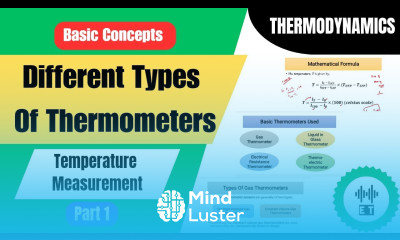
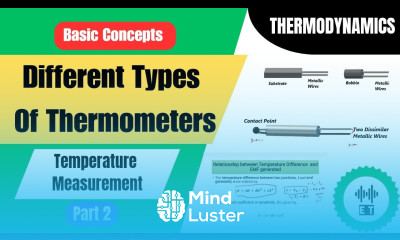
Identify and compare different types of thermometers, including liquid-in-glass, resistance, and infrared thermometers, for various applications
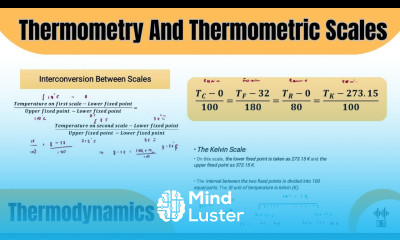
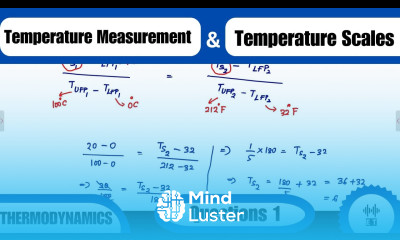
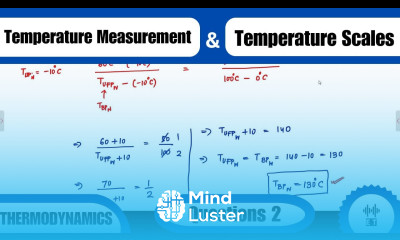
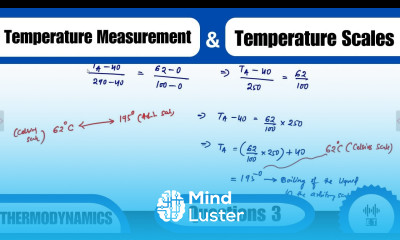
Explain the working principles of thermometric scales such as Celsius, Fahrenheit, and Kelvin, and perform conversions between them accurately
Apply calibration methods to ensure the accuracy and reliability of different thermometers in scientific and industrial contexts
Analyze the physical properties that enable temperature measurement, including thermal radiation, liquid expansion, and resistance changes in metals
Evaluate the suitability of various thermometers for specific applications in healthcare, weather forecasting, and industrial systems
Demonstrate how to calibrate thermometers and interpret temperature readings in real-world scenarios
Assess the importance of accurate temperature measurement for safety, scientific research, and technological development
Utilize thermometry principles to troubleshoot and maintain temperature measurement devices effectively
Describe the role of thermometry in environmental monitoring, climate studies, and weather prediction systems
Implement best practices for temperature measurement in laboratory, industrial, and everyday settings
Communicate complex thermometry concepts clearly to diverse audiences for educational and professional purposes
Thermometry,
in this course we will learn about the fundamental principles of thermometry, the various types of thermometers, and the physical properties that enable them to function—such as expansion of liquids, resistance changes in metals, and thermal radiation. You’ll explore the most commonly used thermometric scales including Celsius, Fahrenheit, and Kelvin, and understand how to convert between them. The course also covers the calibration of thermometers and their applications in daily life, healthcare, weather forecasting, and industrial systems. Whether you are a student, educator, or science enthusiast, this course provides a clear and practical foundation for understanding how temperature is measured, why it matters, and how accurate measurement affects science, safety, and technology. No prior background is required—just curiosity and a willingness to explore the world of heat and measurement. ENGINEERING TUTORIAL